
Grappling with Game Indie Development as a Massive Undertaking (and is it worth it?)
Following my Game Progress Update a few days ago, I spent some time inventorying remaining features in the hope of estimating when the game might ostensibly launch.
For anyone who has ever tried to launch a game (or any software project), you can imagine what happened next. While I won’t get into all of it, there was definitely some pixel-styled apocalyptic imagery flashing around in my head.
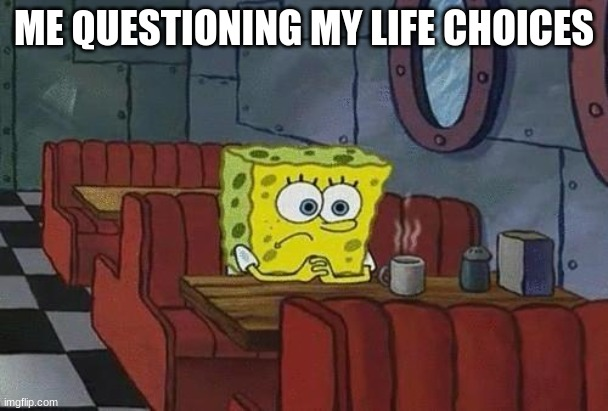
Side note: I was on vacation all this week, so I had a lot of time to think, which can be either life-giving or scary, depending on what else is going on with me.
What I Discovered
After quite a bit of soul searching, I landed on a couple of interesting things.
First, I was losing perspective on the holistic nature of life. Any kind of passion project requires, well, passion. The problem with passion is it can become all-consuming, driving us to lose sight of other dimensions of our life, such as relationship, physical health, career progression, even other passion projects. When I examined the other components of my life and set them alongside this project, I was able to evaluate progress in a different light. This game is not everything.
Second, it’s better to think of pursuing game development as opposed to this game. Painters (any artist really) experience the struggle of the project, where a single, isolated work becomes the object. In other words, a single painting, a single film, a single context becomes what the artistic practice is about. This seems faulty to me. Instead, I want to subject myself to the craftsman’s or artist’s pursuit as a lifelong journey. This made the idea of failure after enormous effort directed to one work something I could be okay with. It became about the passage, about being a student, and about enrichment of inner life through this process.
Third, I was seriously, existentially catastrophizing. The real catastrophizing wasn’t “what if I put all this work into this game and no one buys it and it’s all for nothing???” I did think that but those ruminations were merely symptoms of the real catastrophizing: what if failure to sell a game or find players is a signal as to my value. In other words, if this game fails (meaning it falls below some constantly-shifting-expectation) am I personally a failure? Does it mean I’m not worth much? All of that might sound harsh, but I don’t think I’m alone in this type of self-flagellation. However, I remembered my value as a human isn’t tied to external failures or external successes. Succeeding might make me feel good, but I shouldn’t tie my worth to that. Failure will make me feel bad, but again, it shouldn’t be the thing by which I judge my worth.
Specific Estimates
Below include some of the specifics around how the estimating process went for me.
A quick note on my methodology:
- I track all of my time toward game development on a spreadsheet (see image below), which gives me some sense of how long certain parts of the game have taken to develop. It gives a baseline.
- Because the story arc has been written out, I could list all major questlines and the % completed toward each.
- I have a rough sense of how much time I can put into the game on a daily basis for the rest of the year (my personal capacity).
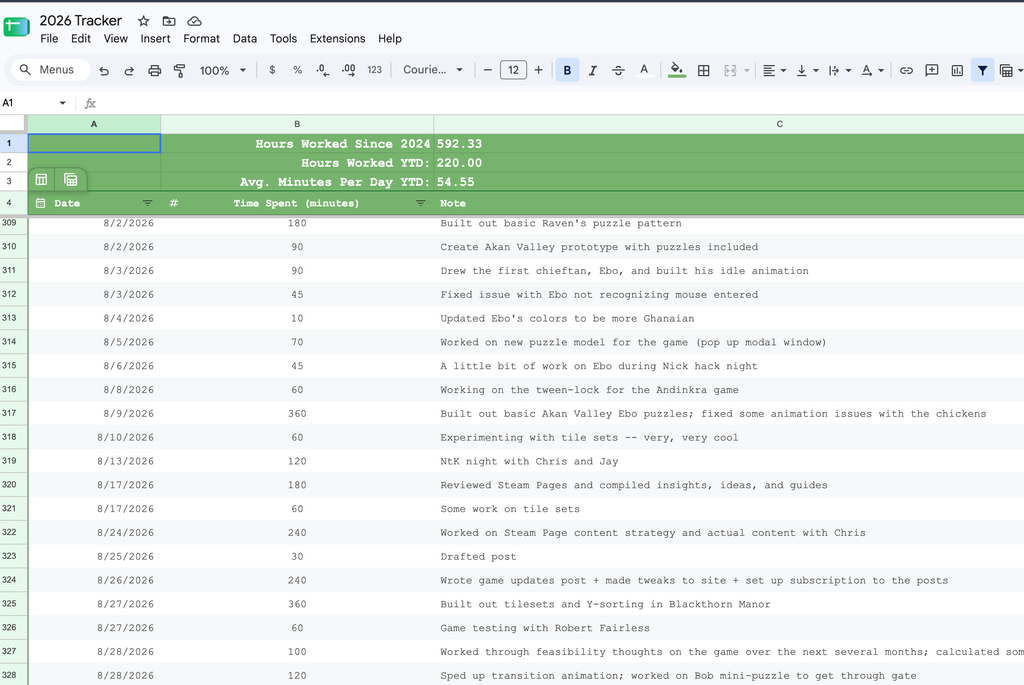
This analysis showed me two things: first, there’s a lot (a 💩 ton) of work left but also, second, the game is within striking distance. Bonus: it also encouraged me to scope down on scale where possible so more focus on quality would be possible.
The final thing I did was set key milestones to make sure I was progressing against this plan. Essentially, a number of key quest-lines should be completed by the close of September, October, and November respectively.
I know anyone reading this has their own stories of discouragement and meltdown – and also of successes. Please post below if you do!
-Josh
Leave a Reply